

AI browsers are becoming increasingly popular because they save time, automatically summarize information and help with everything from reading the news to online shopping. It all sounds great until the uncomfortable question comes up: where does all the data you share with artificial intelligence actually end up. Experts warn that the convenience these tools offer comes with serious security trade-offs and the risks are higher than most users realize.

Traveling has never been smarter. Google Maps now uses the power of Gemini AI to provide users not just with routes, but with contextual recommendations, tips to avoid traffic, and real-time travel optimization. Instead of static navigation, the app becomes a proactive assistant that learns from your habits, predicts challenges on the road, and helps you make decisions while on the move.
With the arrival of Gemini 3, Google is announcing a radical upgrade in the world of artificial intelligence. The new model promises more powerful reasoning, deeper understanding of context and the ability to work with complex visual and language tasks. This step could mark the transition from the era of AI assistants to an era of AI partners ready for complex tasks, creative thinking and integration into everyday digital tools.

Now may be a pivotal moment to turn toward climate tech investments, according to analysts and leading investors. Although capital in the sector appeared to decline over the past year, new projections and reports reveal significant potential from renewable energy and artificial intelligence to adaptation and resilience technologies. As governments and corporations raise their decarbonization ambitions, climate tech is no longer just a “green idea,” but a strategic and financially viable opportunity.

OpenAI has announced that group chats are rolling out globally to all ChatGPT users on the Free, Go, Plus and Pro plans. The new feature allows you to participate in a shared conversation with friends, family or colleagues, together with ChatGPT, to plan, create and make decisions as a group.

Researchers at Penn State University have developed an unexpectedly simple yet highly advanced approach that could change the way we build smart devices. Instead of expensive laboratory procedures, they used materials similar to children’s “Shrinky Dinks” plastic sheets. Patterns of liquid metal are printed onto these sheets, which shrink when heated and conform to three-dimensional surfaces such as skin, furniture or curved household objects.

As Europe prepares for the transition to 6G networks, researchers, policymakers and citizens are working together to ensure that the next digital revolution is not only faster, but also ethical, sustainable and inclusive. The European project 6G4Society emphasizes that technology should not be viewed merely as a technical leap forward, but as an opportunity to build infrastructure around social values rather than purely market interests.

Chinese tech giant Baidu has unveiled ERNIE 4.5 VL 28B A3B Thinking — a multimodal artificial intelligence model that reportedly outperforms leading systems like GPT-5 and Gemini 2.5 Pro in complex tasks involving text, images and data visualization. Baidu claims its mixture-of-experts architecture enables exceptional results while using only a fraction of its total parameters. The company has also open-sourced the model under the Apache 2.0 license, encouraging broad adoption and industry collaboration.

As of late September 2025, China has reached a total of 4.71 million 5G base stations, according to data from the country’s Ministry of Industry and Information Technology, making it the largest and most extensive 5G network in the world. This impressive growth continued with a net increase of 455,000 new stations compared to the end of the previous year, clearly demonstrating that China’s digital infrastructure expansion is in full swing.
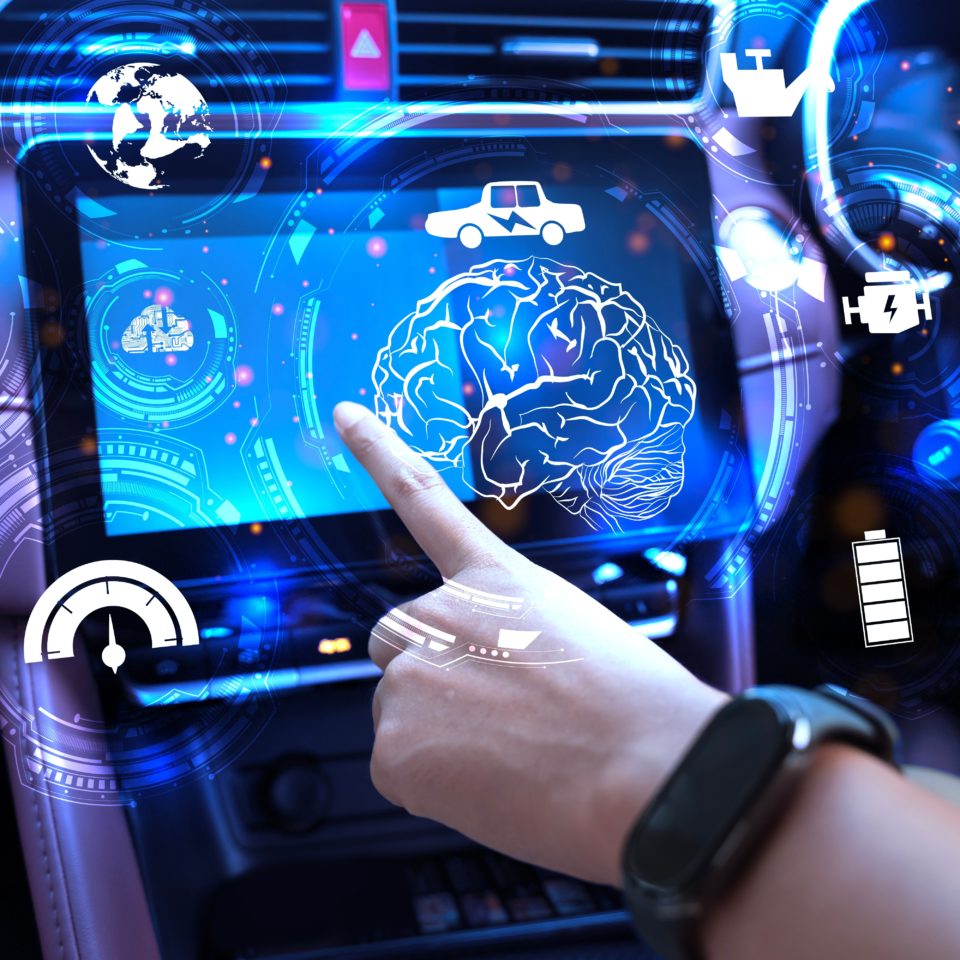
General Motors has announced a major leap in the driving experience set for 2026: the integration of a Google Gemini–powered AI assistant directly into its vehicles. Instead of relying on limited voice commands, drivers will be able to converse with an intelligent assistant that understands context, connects to the web, and uses vehicle data to offer personalized features from maintenance tips and optimized routes to automatically pre-cooling the car before entry. This move signals how AI and autonomy are becoming integral parts of the automotive future.
Endorsed by